

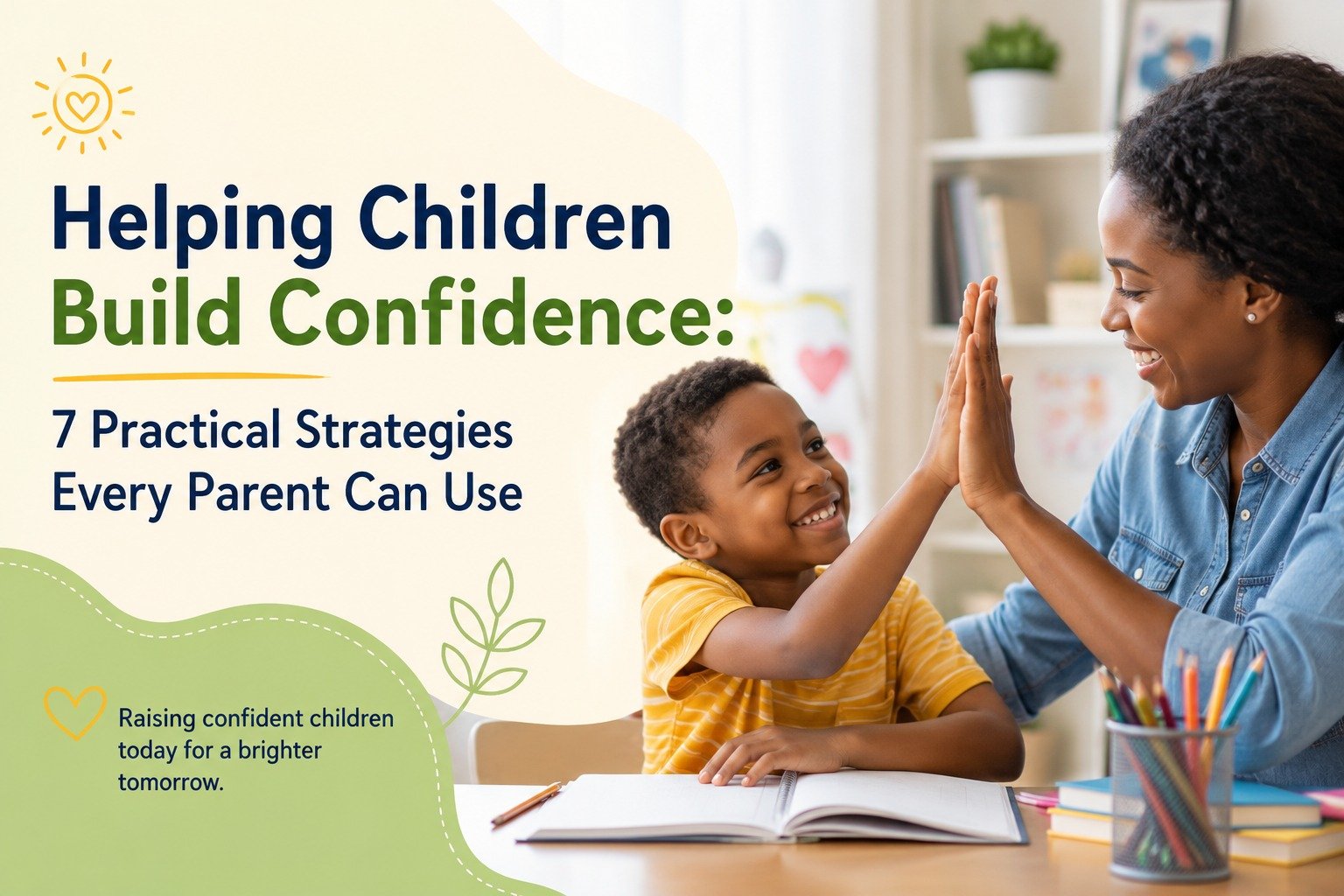
Confidence is one of the most valuable gifts a parent can give a child. Children who believe in themselves are more likely to take on challenges, build healthy relationships, perform better academically, and develop resilience when facing setbacks.
The good news is that confidence is not something children are simply born with—it can be nurtured and developed through everyday experiences and positive parenting practices.
1. Celebrate Effort, Not Just Results
Many parents naturally praise good grades, awards, and achievements. While celebrating success is important, it's equally valuable to recognize the effort behind those accomplishments.
Instead of saying, "You're so smart," try saying, "I'm proud of how hard you worked on that project."
This helps children understand that growth comes through dedication and persistence rather than natural talent alone.
2. Allow Children to Solve Problems
It can be tempting to step in and fix every challenge your child faces. However, confidence grows when children learn that they can overcome obstacles on their own.
Offer guidance when needed, but allow them to think through solutions and make age-appropriate decisions. Each successful problem-solving experience strengthens their belief in their abilities.
3. Encourage Healthy Independence
Giving children responsibilities appropriate for their age teaches accountability and self-reliance.
Simple tasks such as organizing school materials, making their bed, helping with household chores, or managing a small allowance can foster a sense of competence and achievement.
4. Create a Safe Environment for Mistakes
Children need to understand that mistakes are a normal part of learning.
When a child fails or makes an error, avoid harsh criticism. Instead, discuss what can be learned from the experience and encourage them to try again. A supportive environment reduces fear and promotes confidence.
5. Model Confidence Yourself
Children often learn more from what parents do than what they say.
Demonstrate positive self-talk, resilience during difficult situations, and a willingness to learn new skills. When children observe adults handling challenges confidently, they are more likely to develop similar habits.
6. Encourage Participation in Activities They Enjoy
Whether it's sports, music, art, reading, coding, dancing, or community service, activities that align with a child's interests provide opportunities for growth and accomplishment.
Success in these areas can significantly boost self-esteem and help children discover their unique strengths.
7. Show Unconditional Love and Support
Children thrive when they know they are valued regardless of their achievements.
Regularly express love, listen attentively to their thoughts, celebrate their progress, and reassure them during difficult times. A strong emotional foundation gives children the confidence to explore, learn, and grow.
Final Thoughts
Building confidence is a gradual process that requires patience, encouragement, and consistency. By creating supportive environments, encouraging independence, and focusing on growth rather than perfection, parents can help children develop the confidence they need to navigate life's challenges successfully.
Every positive interaction matters. Small daily actions can make a lasting difference in helping a child believe in themselves and their potential.


Comments
Be the first to share your thoughts on this article.
Leave a comment
Your email address will not be published. Comments are moderated and appear within 24 hours.